
Greetings, skin microbiome enthusiasts,
I spent 20 years in agricultural biotechnology. At Novozymes. At Pivot Bio. Launching microbial products into markets that demanded one thing: proof that the science works.
Agriculture taught me something that skincare never did: honesty about how your product solves a real problem. No marketing fluff. No promises you can’t keep. Just biology, results, and women who understood the difference.
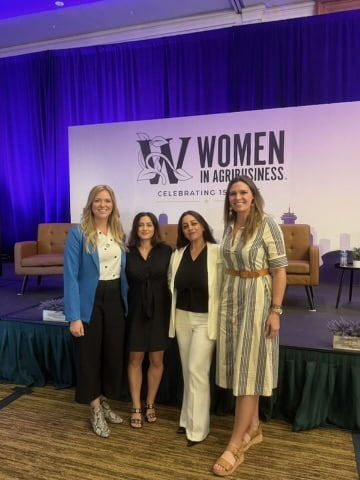
Last week, I came home to that world. The Women in Agribusiness Conference. 2026, the UN’s International Year of the Woman Farmer. A room full of accomplished, confident women from every corner of agriculture.
And I was there to talk about entrepreneurship.
The irony wasn’t lost on me.
Here I was, a biotech scientist turned skincare founder, standing in front of women who’ve built agricultural enterprises, navigated government policy, managed land, built supply chains, led teams. And I was about to tell them that the thing that matters most is not taking no for an answer.
But that’s exactly what I told them.
I shared my journey. About leaving Iran 24 years ago to live the life my father taught me was possible. About launching a skincare brand in a market that is so congested, so saturated, so filled with noise, that most people would say it’s impossible.
And then I asked them a question.
“How many of you have been disappointed with what the skincare industry has to offer?”
Almost every hand went up.
I knew this was a real problem. I’d lived it. I’d searched for a product that made sense to me and couldn’t find it. But seeing those hands. Seeing those brilliant, accomplished, impossible-to-impress women nod and say yes, I’ve felt that frustration too. That hit different.
Here’s what I shared with them about Fafabiotic.
The skincare market is crowded. There’s no question about that. But being crowded doesn’t mean it’s full of real options. The beauty industry has designed itself for a specific type of person. And the rest of us, the women who want science-based solutions, who don’t care about overnight miracles, who just want to simplify our lives and trust what we’re putting on our skin, we’re left with nothing.
What we’re seeing shift, finally, is that people don’t want what influencers are selling anymore. They want what actually works. They want science. Real science. Not the marketing version. Not the version designed to get clicks. The actual biology.
They want to be able to trust a brand.
They want simplicity.
And when I talked about how we built Fafabiotic to be customer-focused, how I stay close to the women who use our products, how I ask them questions and actually listen to the answers, I saw something shift in the room.
These women understood. They’re doing the exact same thing in their own businesses.
It was validation. Again. But this time from women I deeply respect.
After the panel, people approached me. Women who’d asked me questions about my journey as an entrepreneur. About how I persevere through the hard parts. About how I stay focused when the criticism gets loud.
But something else came up too.
They wanted to try Fafabiotic.
Not because I sold it to them. Not because I convinced them. But because I showed them that I understand the problem they’ve been experiencing. That I respect their intelligence enough to be honest about what we’re doing, why we’re doing it, and what the science actually shows.
That’s the biggest compliment I can get.
This week, I’m thinking about those 20 years in agriculture. About the women I worked alongside. About the farmers who understood that your product either solves the problem or it doesn’t. There’s no middle ground.
And I’m thinking about how that same principle applies to skincare. You can market the hell out of a product, but at the end of the day, women want to know: does it actually work?
We believe it does.
And more importantly, we believe you deserve to know exactly why.
Until next week, cheers.
